 Sprache
 English
 français
 Deutsch
 русский
 español
 português


Wonach suchst du?

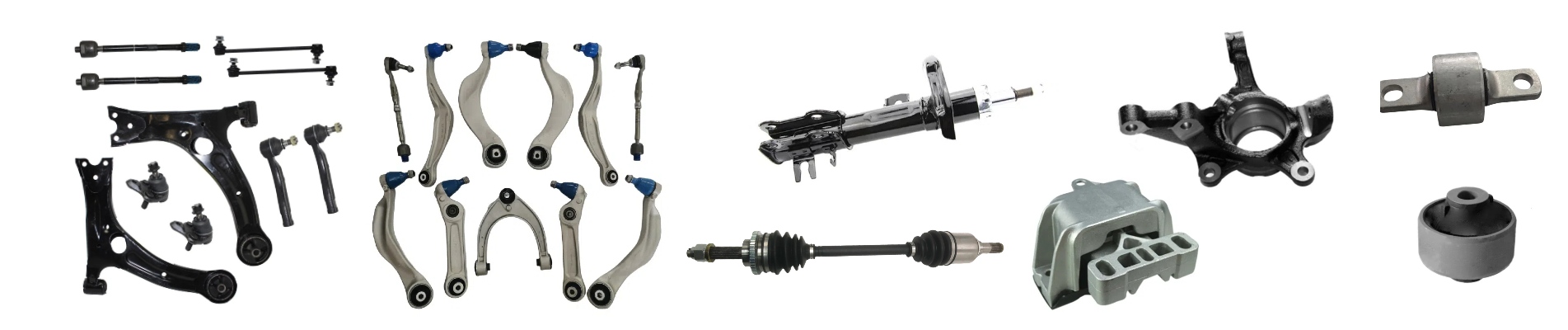
A vehicle’s suspension system is the unsung hero of every smooth, safe ride. It connects your car body to the wheels, absorbs road bumps, stabilizes steering, and ensures consistent tire grip on the road. Consisting of struts, shock absorbers, control arms, ball joints, sway bars, and suspension springs, this complex assembly endures constant stress from rough roads, heavy loads, and daily driving wear. Even minor suspension issues can ruin driving comfort, trigger abnormal tire wear, and severely compromise vehicle handling and braking safety. For all drivers, recognizing common suspension problems and mastering basic fixing solutions is essential to extend vehicle life and avoid costly repairs.
If your vehicle drifts left or right involuntarily even when you release the steering wheel and drive on a flat straight road, you are facing one of the most prevalent suspension issues. The main causes include misaligned wheel alignment, uneven tire pressure, worn suspension bushings, and damaged control arms. Over time, daily driving and road impacts push the wheels out of their factory-specified angles, leading to unbalanced road resistance on tires.
Fix & Prevention: First, check and inflate all tires to the standard pressure to rule out simple tire issues. If the problem persists, get a professional four-wheel alignment at a certified auto shop. For aged vehicles with worn bushings or deformed control arms, replace the damaged suspension components in time to restore balanced wheel positioning.
Hearing clunking, rattling, or squeaking noises when passing speed bumps, potholes, or rough roads is a typical sign of failing suspension parts. Clunking sounds usually stem from loose or worn ball joints, sway bar links, and damaged control arm bushings. Squeaking noises often occur due to dry, unlubricated suspension joints or aging rubber components that lose elasticity.
Fix & Prevention: Inspect all suspension connecting parts for looseness and wear. Tighten loose bolts and replace worn ball joints, sway bar links, and cracked rubber bushings. Regularly lubricate movable suspension joints during routine maintenance to eliminate friction noise and reduce component wear.
A healthy suspension stabilizes the vehicle quickly after hitting road bumps. If your car keeps bouncing up and down repeatedly after passing a pothole or speed bump, your shock absorbers or struts are most likely worn out. Shock absorbers are responsible for dampening spring vibration; once they lose damping capacity, the suspension springs will rebound freely, causing continuous bouncing. Severe wear will also lead to unstable vehicle control at high speeds.
Fix & Prevention: Test the shock absorption performance by pressing down each corner of the car. If the body bounces more than twice, the shock absorbers need replacement. It is recommended to replace shocks or struts in pairs (front or rear) to ensure consistent damping performance on both sides, maintaining balanced driving stability.
Suspension system abnormalities are a major culprit of irregular tire wear. Misaligned wheels, tilted camber angles, and loose suspension parts cause tires to contact the road unevenly, resulting in phenomena like inner-edge wear, outer-edge wear, or patchy bald spots on tires. Unlike normal uniform tire wear, this abnormal wear drastically shortens tire service life and increases the risk of tire blowouts.
Fix & Prevention: Inspect tire wear regularly. Once uneven wear is found, check wheel alignment and suspension component integrity immediately. Fix faulty suspension parts and recalibrate wheel angles timely. Meanwhile, rotate tires every 5,000 to 8,000 kilometers to balance tire wear.
The suspension system is closely linked to the steering system. Worn ball joints, deformed control arms, or aging suspension bearings will lead to abnormal steering feedback. Some drivers experience stiff, heavy steering that requires extra effort to turn, while others face overly loose steering with excessive free play, making the vehicle difficult to control accurately.
Fix & Prevention: Conduct a comprehensive inspection of steering linkage and suspension connecting components. Replace worn ball joints and damaged bearings, and adjust steering free play to the factory standard. Avoid violent steering and hitting curbs at high speeds to prevent suspension component deformation.
If your car body sits lower on one side or the front/rear height is obviously inconsistent, the suspension springs are likely fatigued or broken. Long-term heavy load driving and years of compression will cause suspension springs to lose elasticity and deform, resulting in unbalanced vehicle height. This issue not only affects vehicle appearance but also completely disrupts suspension balance and driving stability.
Fix & Prevention: Replace fatigued or broken suspension springs in pairs to ensure consistent support on both sides. Avoid overloading your vehicle for a long time, which can accelerate spring aging and deformation.
Most suspension problems stem from neglected daily maintenance and improper driving habits. To keep your suspension system in optimal condition, avoid speeding over potholes and speed bumps, refrain from hitting curbs or off-road driving with a street car, and check suspension components regularly during routine car maintenance. Timely replacement of aging rubber parts and faulty dampers can effectively avoid most common suspension failures, ensuring long-term driving comfort and safety.

BEREIT FÜR EIN ABO?
SMK Unternehmen s liefern Autoteile für unten Auto-Ersatzteile : Japanisches Auto: Toyota, Honda, Nissan, Mazda, Subaru, Mitsubishi, Suzuki, Isuzu ... Europäisches Auto: BMW, Benz, VW, Audi, Skoda, Porsche, Maserati, Renault, Peugeot , Citroen, Fiat, Opel, Land Rover ... Amerikanisches Auto: Tesla, Ford, Chrysler , Cadillac , Buick , GMC, Chevrolet, Lincoln, Fiat, Dodge, ... Koreanisches Auto: Hyundai, Kia, Daewoo ... Chinesische Autos: Chery, Geely, GreatWall, Haval, BYD, Changan, JAC ... Wir liefern Teile weltweit: USA, Kanada, Europa, Mexiko, Kolumbien, Korea ... Wir sind führender Lieferant für die folgenden Autoteile: Aufhängungs- und Lenkungsteile (Querlenker, Spurstange, Stabilisatorverbindung usw.) Tesla Aftermarket P Kunst. Motor M Montage/Übertragung M Menge SMK Auto Teile ist speziell für die Autoreparatur konzipiert Teile Unsere Fahrwerkskomponenten werden strengen Tests unterzogen, um den komplexen und wechselhaften Straßen- und Klimabedingungen problemlos standzuhalten. Die Produkte bieten nicht nur außergewöhnliche Haltbarkeit, sondern auch umfassende Kompatibilität und hervorragende Stabilität und gewährleisten so eine langfristige und zuverlässige Unterstützung Ihrer Fahrzeuge. Viele ausländische Kunden pflegen langjährige Partnerschaften mit uns. Dank unserer kontinuierlichen Kundengewinnung vertrauen uns viele ausländische Kunden die Produktion verschiedenster Autoteile an. Um den vielfältigen Kundenbedürfnissen gerecht zu werden, erweitern wir aktiv neue Produktlinien. Wir halten uns an hohe Fertigungsstandards und stellen sicher, dass jedes Produkt die strengen Sicherheits- und Haltbarkeitsanforderungen verschiedener Märkte erfüllt. Wir laden Kunden weltweit ein, sich für unsere Produkte zu entscheiden und so Ihren Fahrzeugen besseren Schutz und bessere Leistungssteigerungen zu bieten! SMK ist stets kundenorientiert, verbessert kontinuierlich die Produktqualität und das Serviceniveau und ist bestrebt, für globale Kunden einen Mehrwert zu schaffen. Auch in Zukunft werden wir dem Grundsatz „Qualität zuerst, Kunde zuerst“ folgen und Hand in Hand mit unseren Partnern zusammenarbeiten, um eine bessere Zukunft zu schaffen.
 IPv6-Netzwerk unterstützt