 Sprache
 English
 français
 Deutsch
 русский
 español
 português


Wonach suchst du?

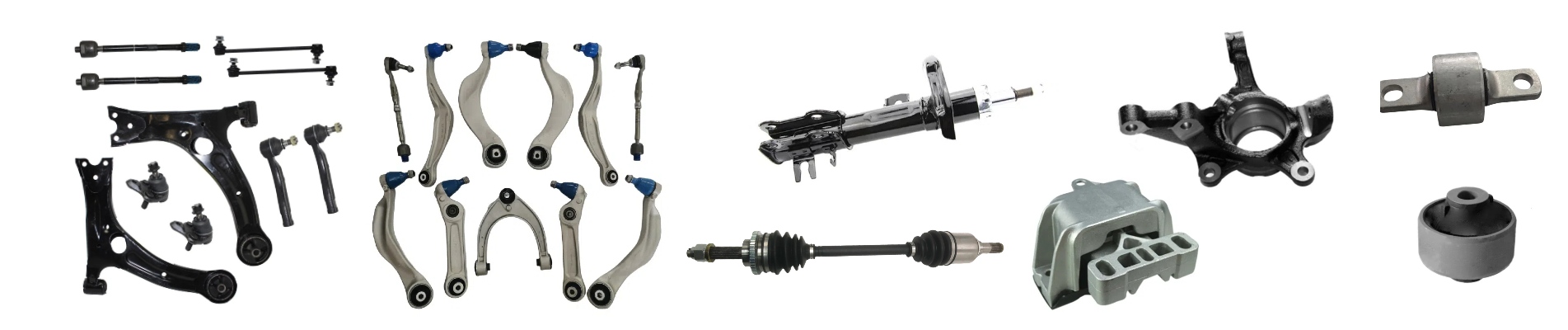
Most drivers blame bumpy rides, road noises, or unstable steering on tires or shock absorbers. In fact, one of the most overlooked yet critical parts behind vehicle comfort and safety is the control arm. As a core component of your car’s suspension system, it quietly connects your wheels to the chassis and controls every wheel movement during driving. Today, we break down everything you need to know about control arms, including their function, structure, common failures, and professional repair tips.
A control arm (also known as an A-arm or wishbone) is a rigid hinged metal link in the suspension system. It acts as a bridge, connecting the vehicle’s subframe to the wheel steering knuckle. Unlike fixed metal parts, it is a flexible movable component that guides and limits wheel movement.
Most family cars adopt a MacPherson suspension structure with a singlelower control arm per front wheel. Each control arm is equipped with two core wearable parts: bushings and a lower ball joint. The bushings fix the arm to the subframe and filter vibration, while the ball joint connects to the steering knuckle to support steering and suspension travel.
Many car owners encounter a dilemma during maintenance: should they replace individual bushings or the entire lower control arm assembly? Combined with the maintenance case of the 2010 Toyota RAV4, we give professional suggestions:
Replace only bushings (cost-effective choice): If the control arm metal body is not deformed, bent or rusted severely, and only the longitudinal and lateral rubber bushings are cracked and damaged, independent bushing replacement is completely feasible. It retains the original factory control arm, greatly reduces maintenance costs, and restores suspension performance to the original state.

BEREIT FÜR EIN ABO?
SMK Unternehmen s liefern Autoteile für unten Auto-Ersatzteile : Japanisches Auto: Toyota, Honda, Nissan, Mazda, Subaru, Mitsubishi, Suzuki, Isuzu ... Europäisches Auto: BMW, Benz, VW, Audi, Skoda, Porsche, Maserati, Renault, Peugeot , Citroen, Fiat, Opel, Land Rover ... Amerikanisches Auto: Tesla, Ford, Chrysler , Cadillac , Buick , GMC, Chevrolet, Lincoln, Fiat, Dodge, ... Koreanisches Auto: Hyundai, Kia, Daewoo ... Chinesische Autos: Chery, Geely, GreatWall, Haval, BYD, Changan, JAC ... Wir liefern Teile weltweit: USA, Kanada, Europa, Mexiko, Kolumbien, Korea ... Wir sind führender Lieferant für die folgenden Autoteile: Aufhängungs- und Lenkungsteile (Querlenker, Spurstange, Stabilisatorverbindung usw.) Tesla Aftermarket P Kunst. Motor M Montage/Übertragung M Menge SMK Auto Teile ist speziell für die Autoreparatur konzipiert Teile Unsere Fahrwerkskomponenten werden strengen Tests unterzogen, um den komplexen und wechselhaften Straßen- und Klimabedingungen problemlos standzuhalten. Die Produkte bieten nicht nur außergewöhnliche Haltbarkeit, sondern auch umfassende Kompatibilität und hervorragende Stabilität und gewährleisten so eine langfristige und zuverlässige Unterstützung Ihrer Fahrzeuge. Viele ausländische Kunden pflegen langjährige Partnerschaften mit uns. Dank unserer kontinuierlichen Kundengewinnung vertrauen uns viele ausländische Kunden die Produktion verschiedenster Autoteile an. Um den vielfältigen Kundenbedürfnissen gerecht zu werden, erweitern wir aktiv neue Produktlinien. Wir halten uns an hohe Fertigungsstandards und stellen sicher, dass jedes Produkt die strengen Sicherheits- und Haltbarkeitsanforderungen verschiedener Märkte erfüllt. Wir laden Kunden weltweit ein, sich für unsere Produkte zu entscheiden und so Ihren Fahrzeugen besseren Schutz und bessere Leistungssteigerungen zu bieten! SMK ist stets kundenorientiert, verbessert kontinuierlich die Produktqualität und das Serviceniveau und ist bestrebt, für globale Kunden einen Mehrwert zu schaffen. Auch in Zukunft werden wir dem Grundsatz „Qualität zuerst, Kunde zuerst“ folgen und Hand in Hand mit unseren Partnern zusammenarbeiten, um eine bessere Zukunft zu schaffen.
 IPv6-Netzwerk unterstützt